
A few days ago we learned about the call for entries for international short films at the Berlin Festival, one of the most important in the world, which pays special attention to short films. The next edition will take place from February 5 to 15, 2015.
This is a Class A festival, according to the FIAPF classification, and therefore requires an international premiere. It is important to clearly distinguish between world premiere and international premiere. In the first case, the short film cannot have premiered in its country of origin, and therefore the screening in Berlin would be the first of its entire career. In the second case, it is accepted that it has premiered in the country of origin. However, and this is important, although Berlin accepts international premieres, world premieres are valued, something we must keep very much in mind, since we will certainly have fewer chances if we do not preserve the world premiere.
Let us look at last year’s selection, with 25 short films, one of them out of competition and a European premiere, Unogumbe by Mark Dornford-May: 6 of the 24 shorts were international premieres compared to 18 that had world premieres. The statistics speak for themselves. These were the shorts in Berlinale Shorts in 2014:
- Afronauts, Frances Bodomo, USA, 13′ (IP)
- Birds, Ulu Braun, Germany, 15′ (WP)
- La Casona (The Big House), Juliette Touin, Cuba, 25′ (IP)
- Darkroom, Billy Roisz, Austria, 13′ (WP)
- Do serca Twego (To Thy Heart), Ewa Borysewicz, Poland, 10′ (IP)
- Im Tekhayekh, Ha’Olam Yekhayekh Elekha (Smile, and the World Will Smile Back), Familie al-Haddad/Ehab Tarabieh/Yoav Gross, Israel / Palestinian Territories, 21′ (WP)
- Kamakura (Snow Hut), Yoriko Mizushiri, Japan, 5′ (WP)
- Laborat, Guillaume Cailleau, Germany, 21′ (WP)
- Marc Jacobs, Sam de Jong, Netherlands, 17′ (WP)
- Om Amira, Naji Ismail, Egypt / Germany, 25′ (IP)
- Optical Sound, Elke Groen/Christian Neubacher, Austria, 11′ (WP)
- Person to Person, Dustin Guy Defa, USA, 18′ (IP)
- Raconte-moi des salades (Salad Days), Olias Barco, Belgium / France, 10′ (WP)
- As Rosas Brancas (The White Roses), Diogo Costa Amarante, Portugal / USA, 20′ (WP)
- Sky Lines, Nadine Poulain, Serbia, 10′ (IP)
- Solo te puedo mostrar el color (I Can Only Show You the Color), Fernando Vílchez Rodríguez, Peru, 26′ (WP)
- Symphony no. 42, Réka Bucsi, Hungary, 10′ (WP)
- Tant qu’il nous reste des fusils à pompe (As Long As Shotguns Remain), Caroline Poggi/Jonathan Vinel, France, 30′ (WP)
- Taprobana, Gabriel Abrantes, Portugal / Sri Lanka / Denmark, 24′ (WP)
- Three Stones for Jean Genet, Frieder Schlaich, Germany, 7′ (WP)
- Unogumbe (Noye’s Fludde), Mark Dornford-May, South Africa, 35′ (EP)
- Un Paraíso (A Paradise), Jayisha Patel, Cuba, 14′ (WP)
- Washingtonia, Konstantina Kotzamani, Greece, 24′ (WP)
- Wonder, Mirai Mizue, France / Japan, 8′ (WP)
- Xenos, Mahdi Fleifel, Denmark / United Kingdom, 13′ (WP)
(WP = World premiere, IP = International premiere)
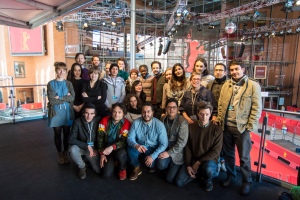
Selected Short Film Directors
In addition to the prestigious Berlinale Shorts, in Berlin short films have another option to participate, somewhat less well known. This is the Generation section. In this case there are two types of competitions, both dedicated to children and young audiences:
- Kplus for children
- 14plus for young audiences
Let us look at the main differences between Berlinale Shorts and Generation, the latter being more open regarding world premieres:
- Longer duration in Berlinale Shorts, 30 minutes, compared to 20 minutes for Generation.
- Preference for international and world premieres, but they accept shorts that are European premieres, an option to consider if we have already premiered internationally.
The short films selected in Generation in the last edition were:
Short films – Generation 14plus
- Cowboys Janken Ook (Even Cowboys Get to Cry), Netherlands, by Mees Peijnenburg – IP
- Emo (the musical), Australia, by Neil Triffett – WP
- Exchange & Mart, Great Britain, by Martin Clark and Cara Connolly – EP
- Luna Vieja (Old Moon), Puerto Rico, by Raisa Bonnet – EP
- Mike, Great Britain, by Petros Silvestros – WP
- Proavlio (Schoolyard), Greece, by Rinio Dragasaki – IP
- Rhizome, Japan, by Masahiro Ohsuka – EP
- Seagulls, Great Britain, by Martin Smith – WP
- Snowblind, Australia, by Sean Kruck, Berlinale Generation 14plus 2009: Summer Breaks – IP
- Soliton, Japan, by Isamu Hirabayashi, Berlinale Generation 14plus 2013: Ninja & Soldier –WP
- Søn (Son), Denmark, by Kristoffer Kiørboe – WP
- Tits, Great Britain, by Alex Winckler, Berlinale Generation Kplus 2011: Thomas – IP
- iBhokhwe (The Goat), South Africa, by John Trengove, Berlinale Talent 2014 – WP
- Vetrarmorgun (Winter Morning) Faroe Islands, by Sakaris Stórá, Berlinale Talent 2010) – IP
Short films – Generation Kplus
- Ağrı ve Dağ (Ağri and the Mountain), Turkey, by Hasan Serin – EP
- el (away), Hungary, by Roland Ferge – WP
- Eleven, New Zealand, by Abigail Greenwood – WP
- Eu não digo adeus, digo até logo (I Don’t Say Goodbye, I Say See You Soon), Brazil, by Giuliana Monteiro – WP
- Hijos de la tierra (Earth’s Children), Peru, by Diego Sarmiento, Berlinale Talent 2014 – WP
- Kalle Kran, Sweden, by Johan Hagelbäck, Berlinale Generation Kplus 2013: Köttbullarna och mobbångrarna – WP
- Min vän lage (My Friend Lage), Sweden / Denmark, by Eva Lindström, Berlinale Kinderfilmfest 1995: Lutning – EP
- Moy lichniy los’ (My Own Personal Moose), Russian Federation, by Leonid Shmelkov – WP
- Nain Géant (Dwarf Giant), Switzerland / France, by Fabienne Giezendanner – WP
- Out of this World, Sweden, by Viktor Nordenskiöld – WP
- Pigs, USA / Singapore / Malaysia, by Laura Mohai – IP
- Rangzen (Freedom), India, by Gaurav Saxena – WP
- Sārtulis (Little Ruddy) Latvia, by Dace Rīdūze, Berlinale Generation Kplus 2011: ZĪĻUKS – WP
- Sepatu Baru (On Stopping the Rain), Indonesia, by Aditya Ahmad – IP
- Sprout, Republic of Korea, by Ga-eun Yoon – IP
- The Dam Keeper, USA, by Robert Kondo and Dice Tsutsumi – WP
- Vāsa (Vasa), Latvia, by Jānis Cimmermanis, Berlinale Generation Kplus 2012: Corrida – WP
No fewer than 31 short films in total, of which only 5 are European premieres, 8 international premieres and 18 world premieres. The percentage is once again very clear in favor of world premieres.
The visibility that short films have at the Berlinale is excellent, with some 56 short films in competition in 2014, in three different categories (leaving aside the Perspektive Deutsches Kino section dedicated exclusively to German feature and short film productions).
The entry fee for any of the categories is €60 and the entry deadline closes on November 21, allowing registration by uploading a video to the festival server. It is certainly worth carefully considering the possibilities of our short film in Berlin, evaluating participation in a broad sense (it is clear that Berlinale Shorts is not the only option) and preserving the world premiere as much as possible. Let us hope that this year we have some Spanish representation in some of the short film sections.